
About Us
Smart Technologies and Applied Intelligence Research (STAIR) Lab is a research-oriented lab committed to shaping the future through innovation in intelligent, secure, and sustainable systems. Based at National University of Computer and Emerging Sciences (NUCES), Islamabad, the lab stands at the intersection of academia, technology, and societal impact. Our core belief is rooted in the idea that emerging technologies can meaningfully transform industries and improve lives when developed ethically and applied responsibly. With a guiding motto of “Adaptive Intelligence for a Dynamic World,” STAIR Lab aspires to create intelligent systems that can adapt, learn, and respond to real-world complexities.

The work conducted at STAIR Lab revolves around developing transformative solutions using Artificial Intelligence (AI), Internet of Things (IoT), Digital Twin (DT) technologies, Cybersecurity, and Smart Systems. We aim to integrate these technologies into real-world applications while ensuring that the systems are explainable, trustworthy, and scalable. The lab is committed to addressing major global challenges across sectors like healthcare, transportation, smart infrastructure, and secure communications. Our research focus extends to human-centered AI design, secure edge intelligence, and the application of DT models in infrastructure and energy systems. What sets STAIR Lab apart is its emphasis on interdisciplinary collaboration and the fusion of theoretical research with applied innovation. Students, researchers, and collaborators work together in a shared environment that encourages creativity, critical thinking, and ethical decision-making.
Our goal is to create smart and practical solutions that can improve everyday life and help solve real-world problems. We focus on meaningful research, teamwork, and innovation to make a positive impact on society and the future.
Lab Director
Dr. Muhammad Tariq
Professor, School of Engineering, NUCES-FAST, Islamabad, Pakistan
At the heart of STAIR Lab’s vision and progress is the leadership of Dr. Muhammad Tariq, the Lab Director. Under his guidance, the lab has grown into a hub of interdisciplinary research and innovation. His global academic and research exposure, including collaborations in the United States, Japan, South Korea, and Pakistan, enriches the lab’s direction, fostering a culture of excellence and international relevance. His strategic insight has been instrumental in shaping STAIR Lab’s initiatives, empowering young researchers, and driving impactful solutions in the fields of intelligent systems and emerging technologies.
With more than 85 peer-reviewed publications in top-tier venues, Dr. Tariq’s work is widely recognized within the global research community. His contributions have earned him a place among the world’s top 2% of scientists, according to independent global rankings by Stanford University and Elsevier. His research spans critical areas such as Artificial Intelligence (AI), privacy-preserving models for edge and Internet of Things (IoT) systems, secure communication frameworks, federated learning, and Digital Twin (DT) technologies for smart infrastructure. These domains form the backbone of STAIR Lab’s ongoing research and development projects.
Under Dr. Tariq’s leadership, the lab has secured and participated in numerous prestigious international and national research initiatives, including collaborations funded by the North Atlantic Treaty Organization (NATO), the National Science Foundation (NSF), the Ministry of Science and Technology of China, and the South Asian Association for Regional Cooperation (SAARC) Development Fund. These projects focus on cutting-edge topics such as secure integrated sensing and communications, AI-powered speech recognition, and smart connectivity for next-generation wireless systems.
Dr. Tariq’s commitment to mentorship, academic excellence, and ethical innovation has transformed STAIR Lab into a thriving research environment. He leads by example, empowering students and researchers to pursue impactful, interdisciplinary work that balances academic rigor with real-world relevance. Under his guidance, STAIR Lab continues to evolve as a hub for next-generation innovation, pushing boundaries and contributing to the advancement of intelligent systems in an ever-changing digital world.


Technical Expertise and Application Domains
Technical Expertise
-
Artificial Intelligence (AI)
-
Internet of Things (IoT)
-
Generative AI (GAI) and Explainable AI (XAI)
-
Digital Twin (DT)
-
Cyber-Physical Systems (CPS)
-
Blockchain & Distributed Ledger Technologies
-
Federated Learning & Privacy-Preserving AI
-
Web X.0 and Immersive Interfaces
-
Edge and Fog Computing
-
Embedded Systems and Real-Time Simulation
-
Secure Communication Protocols
Application Domains
-
Climate & Environmental Sustainability
-
Intelligent Transportation Systems (ITS)
-
Smart Grids and Electric Power Systems
-
Electric Vehicles & Mobility
-
Precision Agriculture and Food Security
-
Disaster Resilience & Emergency Systems
-
Urban Infrastructure & Smart Cities
-
Smart Healthcare Systems
-
Vehicle-to-Grid (V2G) Networks
-
Industrial Automation and Control
-
Intrusion Detection &Cybersecurity
-
Sensor Analytics & Real-Time Monitoring
Our Team Leads
🔹 Dr. Bushra Tahir
Cluster Lead – Federated Learning & Security
Research Associate, NUCES-FAST, Islamabad
Dr. Bushra specializes in privacy-preserving AI, with a focus on federated learning and decentralized model security. Her research addresses secure data collaboration, privacy assurance, and cybersecurity in distributed edge-based environments.
🔹 Dr. Sana Saleh
Cluster Lead – Computer Vision, Generative AI & IoT
Lecturer, NUCES-FAST, Islamabad
Ms. Sana leads interdisciplinary research at the intersection of computer vision, generative AI, and IoT. She develops efficient and lightweight DL models tailored for smart, resource-constrained embedded systems.
🔹 Dr. Irum Saba
Cluster Lead – Electric Vehicles & Reinforcement Learning
Assistant Professor, NUCES-FAST, Islamabad
Dr. Irum’s work focuses on intelligent control strategies for electric vehicles using reinforcement learning, with an emphasis on adaptive optimization, sustainability, and energy-efficient mobility solutions.
🔹 Dr. Sohail Ahmad
Cluster Lead – Communication Systems & Reflecting Surfaces
Research Associate, NUCES-FAST, Islamabad
Dr. Sohail researches advanced wireless communication technologies, including 5G/6G and intelligent reflecting surfaces, emphasizing spectral efficiency, reliability, and enhanced physical-layer design.

Dr. Bushra Tahir

Dr. Sana Saleh

Dr. Irum Saba

Dr. Sohail Ahmad
Team
"Innovative. Collaborative. Driven."
-
Current Doctoral Researchers
Our current doctoral researchers exemplify dedication, innovation, and resilience in every aspect of their research. They consistently push the boundaries of knowledge, tackling complex real-world problems with deep insight and strong technical expertise. Their passion for discovery and commitment to academic excellence continues to elevate the research standards of our institution.

Ms. Sana Saleh
Doctoral Student
Sana Saleh's research focuses on the intersection of computer vision, IoT, and Generative AI. Her work involves developing lightweight and efficient perception and generation models for intelligent transportation systems.
_edited.png)
Mr. Bahadur Shah
Doctoral Student
Bahadar Shah’s research focuses on self-supervised learning in computer vision for precision agriculture, particularly in anomaly detection and plant disease recognition using data-efficient AI methods.

Mr. Ibad Ullah
Doctoral Student
Ibad Ullah’s research focuses on sustainable energy systems, with an emphasis on CFD-based modeling and optimization of pico-hydropower setups. He leverages advanced simulation tools such as ANSYS-CFX and RETScreen to enhance system performance and efficiency.

Ms. Samreen Arif
Doctoral Student
Samreen Arif's research focuses on embedded IoT and smart systems. She is developing sensor-driven, intelligent automation solutions with a strong emphasis on real-world applications and energy-efficient design.
-
Graduate Researchers
Our graduate researchers bring fresh perspectives and strong analytical skills to the lab. With solid foundations in core engineering disciplines and a passion for innovation, they actively contribute to research projects in Artificial Intelligence (AI), Internet of Things (IoT), and intelligent systems. Their dedication, intellectual curiosity, and evolving technical expertise make them integral to the lab’s collaborative and forward-thinking research environment.
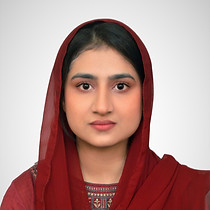

Iqra Saleem
Ms. Iqra's research focuses on Digital Twins, Cybersecurity, and Artificial Intelligence (AI), with an emphasis on developing secure and intelligent AI-driven systems.
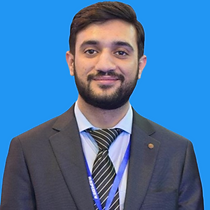
Mr. Nauman Habib
Mr. Nauman’s research is in the domain of Computer Vision, IoT, and Explainable AI. He works on UAV localization and AI-based NLOS communication to enable reliable and transparent autonomous navigation.
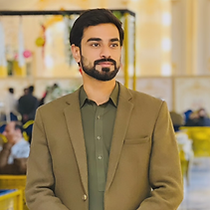
Ans Ali
Mr. Ans focuses on Digital Twin technology with 3D modeling and machine learning to build an intelligent virtual system for simulation, analysis, and real-time insights.

Fasih Ahmad
Mr. Fasih focuses on solar energy forecasting and battery optimization using deep learning and real-time simulation tools. His work combines Embedded Systems, AI, and DT technologies to enhance renewable energy system performance.

Ilqa Shahid
Ms. Ilqa contributes to the NATO project by supporting research and development activities, focusing on innovative solutions and collaborative technologies to achieve project objectives.

Ammar Ali
Mr. Ammar focuses on the Digital-Twin backed Cooperative Perception Framework for Road Safety and Vehicular Data Integrity (FRSG), using Digital Twin technology and cooperative perception to improve road safety and ensure secure, reliable vehicular data.
Undergraduate Researchers - Batch 1
Our Bachelor's students embody the spirit of innovation and curiosity. With a deep curiosity about emerging technologies and a willingness to take on challenging problems, they contribute through prototyping, experimentation, and active project participation. Their enthusiasm and fresh perspective fuel the lab’s innovation culture and often lead to breakthrough ideas.
_edited.jpg)
Shabih Ul Hasnain
Bachelor's Student

Asma Sheryar khan
Bachelor's Student

Muhammad Hamdan
Bachelor's Student

Azzam Atiq
Bachelor's Student

Rehab Shabbir
Bachelor's Student

Ali Mushtaq
Bachelor's Student

Rafay Amir
Bachelor's Student

Rafay Asim
Bachelor's Student

Abdullah Ali
Bachelor's Student

Ali Mushtaq
Bachelor's Student

Zain Khalid
Bachelor's Student

Ahmed Waqar
Bachelor's Student

Ali Majid
Bachelor's Student

Talia Sharmeen
Bachelor's Student

Rubas Arif
Bachelor's Student
Undergraduate Researchers - Batch 2
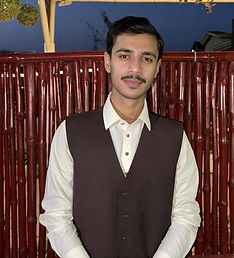.jpg)
Ahmad Akbar
Bachelor's Student

Hanzla Akber
Bachelor's Student
Dayyan Ashar
Bachelor's Student

Ayma Noor
Bachelor's Student

Maleeha Arshad
Bachelor's Student

Ajwa Nadeem
Bachelor's Student

Hafsah Asim
Bachelor's Student

Fatima Shahid
Bachelor's Student

Abdul mohymin
Bachelor's Student

Uneeb Ashraf
Bachelor's Student

Bilal Ahmed
Bachelor's Student

Fasiha Rehan
Bachelor's Student

Subhan Jahanzaib
Bachelor's Student

Hussain Tahir
Bachelor's Student

Zunaira Iftikhar
Bachelor's Student
-
Former PhD Scholars
STAIR Lab’s PhD graduates have demonstrated excellence in advanced research across domains such as AI, energy systems, communication networks, and cybersecurity. Many hold academic positions in leading universities in Pakistan and abroad, while others contribute to industry-driven innovation. With a strong record of high-impact publications and funded collaborative projects, they embody the lab’s commitment to interdisciplinary excellence, practical relevance, and leadership in emerging technologies.

Dr. Shibli Nisar
Associate Professor at MCS-NUST, Rawalpindi, Pakistan

Dr. Muhammad Adnan
Assistant Professor, NUCES-FAST, Faislabad, Pakistan

Dr. Mohsin Kamal
Associate Professor at SEECS-NUST, Islamabad, Pakistan

Dr. Mansoor Ali
Data Analyst, Corporate Sector, Canada
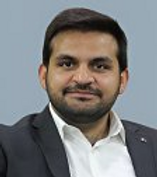
Dr. Faisal Naeem
Assistant Professor, Fraser Valley University, Canada
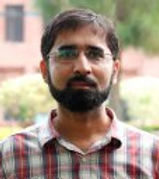
Dr. Muhammad Usman Abbasi
Assistant Professor, NUCES-FAST, Peshawar, Pakistan

Dr. Bushra Tahir
Research Associate, NUCES-FAST, Islamabad, Pakistan

Dr. Sohail Ahmad
Research Associate, NUCES-FAST, Islamabad, Pakistan

Dr. Irum Saba
Assistant Professor, NUCES-FAST, Islamabad, Pakistan

Dr. Sadia J. Siddiqui
Postdoc Fellow, Morgan State University, USA

Lab News & Announcements
STAIR Lab is proud to share recent milestones that reflect our commitment to cutting-edge research, innovation, and global collaboration.
-
NATO Research Grant Secured
In June 2025, STAIR Lab was awarded a prestigious research grant under the NATO Science for Peace and Security (SPS) Programme. The project, titled “Secure Integrated Sensing and Communications (Secure ISAC),” will run through June 2028. Under the leadership of Dr. Muhammad Tariq as the Partner country Project Director (PPD), the project will focus on developing secure and intelligent sensing and communication systems for autonomous and cyber-physical platforms.
-
Upcoming Book: Web X.0 – Intelligent, Decentralized, and Immersive Systems
Book (IET, 2026): Web X.0: Enabling Secure, Intelligent, and Inclusive Digital Futures, edited by Muhammad Tariq and Houbing Herbert Song, Institution of Engineering and Technology (IET), 376 pages, ISBN: 978-1-83724-534-5.
Available at: IET Book Page – Web X.0
-
Recent Publications – 2025
May 2025 | Round-Trip Information Timeliness Based Energy Storage Control for Cyber-Physical Integrated Multi-Energy System | Journal: Journal of Energy Storage.
April 2025 | Modeling the Future: Mathematical Insights for Smart Grid 3.0| Journal: Computers and Electrical Engineering.
March 2025 | Securing the Vetaverse: Web 3.0 for Decentralized Digital Twin-Enhanced Vehicle–Road Safety | Journal: Future Generation Computer Systems.
March 2025 | Real-Time Pothole Detection With Edge Intelligence and Digital Twin in Internet of Vehicles |
Journal: IEEE Internet of Things Journal.
February 2025 | Intelligent Reflective Surfaces Assisted Vehicular Networks: A Computer Vision-Based Framework | Journal: IEEE Transactions on Intelligent Transportation Systems
-
Patents Filed
Vehicle-Borne LiDAR-Vision System for AI-Based Over-Speed Detection and Peer Reporting, Provisional Patent Application No. 326/2026, filed on 06 May 2026, STAIR Lab, FAST-NUCES, Islamabad
Research & Publications
Research Grants & Funded Projects
Ongoing Project:
-
Secure Integrated Sensing and Communications (Secure ISAC)
Funded by the NATO Science for Peace and Security (SPS) Programme | Duration: July 2025 – June 2028 | Role: Partner country Project Director (PPD) | Funding Amount: EUR 350,000
Selected Completed Projects:
-
5G and Beidou Integration
Funded by the Ministry of Science and Technology (MoST), China, via North China Electric Power University (NCEPU) | Duration: 1 year | Role: Principal Investigator | Funding Amount: USD 100,000
-
SAARC GIS/AI-Based Disaster Resilience Platform
Funded by the South Asian Association for Regional Cooperation (SAARC) Energy Center (SEC) Development Fund | Duration: 1 year | Role: Principal Investigator | Funding Amount: USD 43,800
-
AI-Based Speech Recognition
Funded by the National Radio Telecommunication Corporation (NRTC) | Duration: 2 years | Role: Principal Investigator | Funding Amount: PKR 2,000,000
-
Intelligent Wireless Systems
Supported through Princeton University’s MURI/NSF Visiting Fellowship | Duration: 1 year | Role: Visting Fellow
Partnerships & Collaborations
-
National Radio Telecommunication Corporation (NRTC)
-
Princeton University’s, USA
-
North China Electric Power University (NCEPU), China
-
Ministry of Science and Technology, Pakistan
-
Rapidev Private Limited, Pakistan
-
SAARC Energy Center

